Best Payment Gateways for Apps, SaaS, Ecommerce, and POS Products
Payment integration is rarely just a checkout button. In real products, payments touch onboarding, pricing, user access, refunds, invoices, app-store rules, failed renewals, tax logic, fraud risk, analytics, customer support, and backend reliability. That is why founders and product teams usually need a payment gateway integration company that understands the whole revenue workflow, not only the gateway SDK.
Why payment gateway integration decides product revenue
A clean payment flow helps users finish the purchase without confusion. A weak one creates failed payments, broken subscriptions, manual support tickets, and users who paid but cannot access the product.
At Hastree, we have worked on payment and monetization flows for SaaS dashboards, mobile apps, subscription products, ecommerce systems, fintech dashboards, restaurant POS systems, resident portals, and utility-style consumer apps. The important lesson is simple: the gateway matters, but the surrounding architecture matters more.
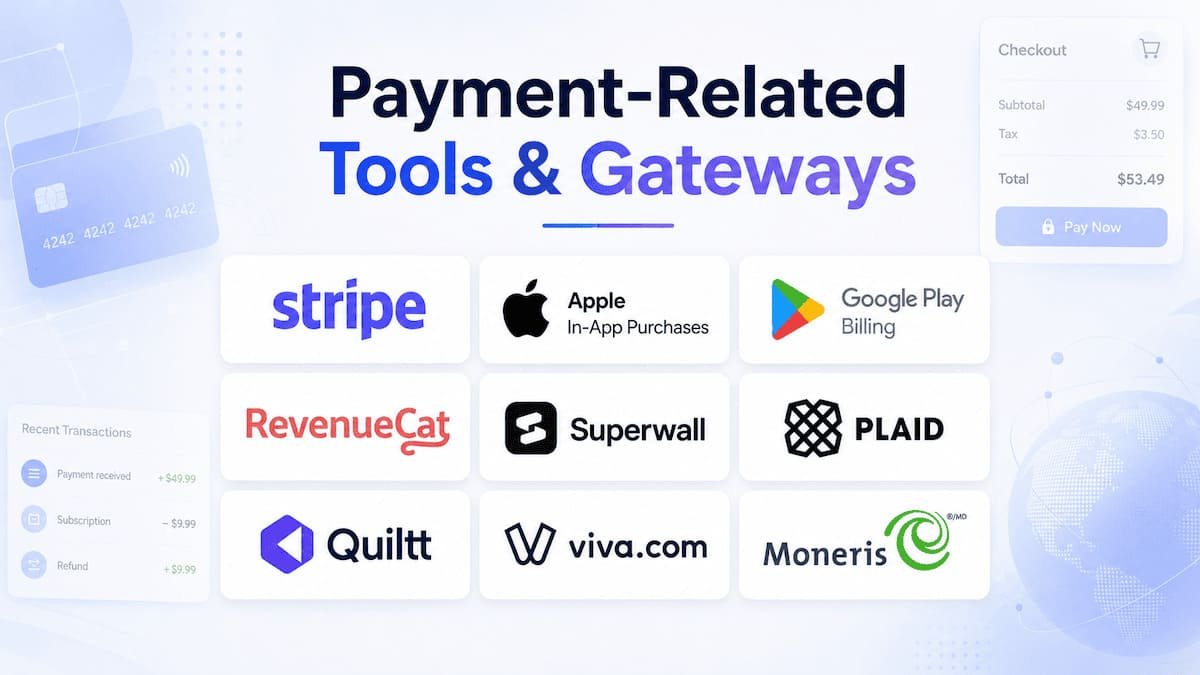
- Stripe for SaaS subscriptions, invoices, checkout sessions, billing portals, coupons, upgrades, and web checkout.
- Apple In-App Purchases and Google Play Billing for digital content, mobile subscriptions, consumables, and app-store compliant monetization.
- RevenueCat for entitlement sync, subscription lifecycle tracking, restore purchases, and cross-platform purchase state.
- Superwall for paywall experiments, pricing tests, campaigns, and mobile subscription conversion optimization.
- Plaid and Quiltt for bank connectivity, transaction visibility, account data, and fintech-style financial workflows.
- Viva Payments and Moneris for ecommerce, regional card processing, POS payments, terminal flows, and merchant-specific requirements.
Stripe integration for SaaS, marketplaces, and ecommerce
Stripe is usually our first recommendation when a web product needs fast, scalable payment gateway integration. We use it for SaaS plan checkout, subscriptions, upgrades, coupon flows, invoice access, payment method updates, failed-payment handling, customer portals, and ecommerce checkout.
For products like dashboards, B2B tools, subscription SaaS, ecommerce platforms, and admin-led billing systems, the backend should create checkout sessions or payment intents, store only the right customer and subscription references, and wait for trusted webhook events before unlocking paid access.
- Use Stripe Checkout when speed, hosted compliance, and standard checkout UX matter.
- Use deeper Stripe Billing logic when subscription states, coupons, upgrades, invoices, trials, and renewals need product-specific handling.
- Use Stripe Connect when a marketplace or platform needs seller onboarding, split payments, payouts, and platform fees.
- Always design webhook handling before launch. Checkout success redirects are useful for UX, but webhooks should drive fulfillment and subscription truth.
In-app purchase integration for iOS and Android
For digital goods, premium app features, content access, reports, credits, and subscriptions sold inside mobile apps, Apple In-App Purchases and Google Play Billing are often mandatory. Treating these like a normal card payment flow is one of the most common mistakes.
In-app purchase integration needs product setup in App Store Connect and Play Console, StoreKit or Play Billing implementation, purchase restoration, server-side verification where needed, entitlement mapping, subscription status updates, billing retry handling, and support flows for cancellation or refund confusion.
- Use Apple In-App Purchases for iOS digital goods and subscriptions sold inside the app.
- Use Google Play Billing for Android subscriptions, consumables, and app-based digital purchases.
- Keep platform product identifiers mapped cleanly to app features and backend entitlements.
- Plan restore-purchase, grace-period, billing-retry, cancellation, and refund states before release.
RevenueCat subscription integration for cleaner entitlements
RevenueCat is useful when a mobile app needs a cleaner subscription layer across iOS, Android, and sometimes web. Instead of scattering product IDs and platform-specific purchase checks across the app, we use RevenueCat entitlements to decide what access a user should receive.
This works well for apps with premium plans, AI credits, paid reports, communication limits, trial access, and subscription-based features. The real value is operational: support teams can understand purchase state faster, developers can avoid duplicate platform logic, and the product team can add or change packages with less release risk.
- Map Apple and Google products to clear RevenueCat entitlements.
- Sync customer identity carefully across anonymous users, logged-in users, and migrated accounts.
- Use entitlement state to unlock features, not hardcoded product identifiers.
- Test restore purchases, plan changes, expired subscriptions, and billing retry states on both platforms.
Superwall paywall integration for monetization experiments
Superwall is useful when the product question is not only whether payments work, but which paywall, offer, placement, and onboarding moment converts best. We see this need in subscription mobile apps, AI apps, utility apps, health apps, education apps, and consumer productivity tools.
A good Superwall integration should not create messy purchase logic. The app still needs a reliable source of truth for access, often RevenueCat or the platform purchase state. Superwall should help present and test paywalls, while the entitlement system decides what the user can actually access.
- Use Superwall when the team wants to test paywall copy, design, pricing, timing, or segments without shipping every experiment as a new app release.
- Connect analytics events so conversion, trial start, purchase, cancellation, and retention behavior can be reviewed properly.
- Keep paywall presentation separate from entitlement validation.
- Use campaign rules carefully so aggressive monetization does not damage onboarding or product trust.
Plaid and Quiltt for fintech product workflows
Plaid and Quiltt are not traditional payment gateways, but they often sit close to payment and finance workflows. We use them when fintech, expense, lending, budgeting, or financial reporting products need bank connections, account visibility, transaction data, balances, or financial institution onboarding.
For example, a spend management platform may use Stripe for billing while using Quiltt or Plaid-style connectivity for bank accounts and transaction data. That combination creates a fuller product experience: payment for the SaaS plan on one side, permissioned financial data inside the application on the other.
- Use Plaid when direct financial account linking and transaction data are core to the product workflow.
- Use Quiltt when a unified connector and normalized financial data layer can reduce integration effort across multiple bank-data providers.
- Design webhook and sync logic carefully because financial data can arrive asynchronously and update after the first connection.
- Handle user consent, reconnect flows, disconnected accounts, institution errors, and data freshness clearly in the UI.
Viva Payments and Moneris for regional commerce and POS
Some products need payment processors that match a specific country, merchant account, bank relationship, terminal setup, or restaurant/POS workflow. That is where providers like Viva Payments and Moneris can be the right choice.
For POS and restaurant systems, payment integration is more operational than a simple online checkout. The product may need terminal payments, tips, split payments, refunds, voids, gift cards, loyalty, receipt printing, cash drawer handling, customer displays, and end-of-day reports. In that environment, payment state has to stay aligned across the POS app, backend, terminal, kitchen flow, and reporting dashboard.
- Use Viva Payments where its merchant, marketplace, smart checkout, wallet, or terminal APIs fit the business region and payment model.
- Use Moneris for Canadian merchant and POS-style payment requirements, including tokenized payments, recurring billing, fraud tools, terminal scenarios, and card-present/card-not-present flows where applicable.
- For restaurant POS, build clear refund, void, tip, split-payment, and receipt flows before pilot rollout.
- For ecommerce and service businesses, make sure settlement, reporting, reconciliation, and support workflows are part of the integration scope.
How to choose the right payment stack
The right payment integration depends on what you are selling, where the customer pays, whether the product is digital or physical, and how access is delivered after payment. A mobile subscription app, a restaurant POS, a lending platform, and a SaaS dashboard should not use the same payment architecture.
Before choosing a gateway, we usually map the product's revenue model, platform rules, target geography, refund and cancellation policy, tax exposure, subscription complexity, analytics needs, and support operations.
- Choose Stripe for web SaaS, ecommerce, invoices, subscriptions, checkout, and marketplace-style billing.
- Choose Apple In-App Purchases and Google Play Billing for in-app digital goods and mobile subscriptions.
- Choose RevenueCat when entitlement consistency across platforms is more important than writing every store-specific purchase state manually.
- Choose Superwall when mobile paywall experimentation and subscription conversion testing matter.
- Choose Plaid or Quiltt when the product needs permissioned bank account data, transactions, balances, or fintech workflows.
- Choose Viva Payments or Moneris when regional merchant processing, terminal support, POS requirements, or local acquiring relationships are the deciding factors.
Common payment integration mistakes we avoid
Most payment problems are not visible during a happy-path demo. They appear after launch, when a subscription renews, fails, refunds, upgrades, downgrades, cancels, or gets restored on a second device.
That is why we treat payment integration as a product workflow, backend workflow, QA workflow, and support workflow at the same time.
- Unlocking paid access from a redirect page instead of trusted webhook or verified transaction state.
- Missing refund, cancellation, renewal, billing retry, and grace-period handling.
- Using different user IDs across app, backend, RevenueCat, Stripe, and analytics systems.
- Forgetting restore purchases in mobile apps.
- Failing to test subscription upgrades, downgrades, expired cards, failed renewals, and sandbox edge cases.
- Not planning tax, currency, country, invoice, settlement, and reconciliation requirements.
- Making support teams inspect raw gateway data instead of giving them clean admin visibility.
How Hastree can help
If you are building a mobile app, SaaS product, ecommerce platform, subscription app, fintech dashboard, marketplace, or POS system, Hastree can help design and implement the payment layer from product planning to production support.
We can integrate a new payment gateway, migrate from an existing gateway, audit broken payment flows, improve subscription handling, connect analytics, add webhook reliability, build admin billing views, and optimize paywalls for conversion.
- Payment gateway integration services for mobile apps, web apps, SaaS, POS, ecommerce, fintech, and marketplaces.
- Stripe payment integration for checkout, subscriptions, billing portals, invoices, coupons, and marketplaces.
- In-app purchase integration for iOS and Android with StoreKit, Google Play Billing, RevenueCat, and Superwall.
- Fintech and bank-data integrations using Plaid and Quiltt.
- POS and regional payment integrations using providers such as Moneris and Viva Payments.
Building a product where payments affect revenue, access, or operations?
Share the product flow with Hastree. We can recommend the right payment stack, identify risky edge cases, and help you build a payment integration that is ready for real customers.
Discuss Payment IntegrationFrequently Asked Questions
Which payment gateway is best for a SaaS product?
Stripe is usually a strong choice for SaaS products because it supports checkout, subscriptions, invoices, customer portals, coupons, payment method updates, and webhook-driven subscription lifecycle handling.
Do mobile apps need in-app purchases instead of Stripe?
If the app sells digital content, premium features, credits, or subscriptions inside iOS or Android apps, Apple In-App Purchases and Google Play Billing are often required. Stripe can still be useful for web checkout, physical goods, services, admin billing, or eligible app-to-web flows depending on platform rules.
Why use RevenueCat with Apple and Google subscriptions?
RevenueCat helps centralize subscription status and entitlements across platforms, which reduces duplicate StoreKit and Play Billing logic and makes access control easier to maintain.
What is the difference between Superwall and RevenueCat?
Superwall is mainly used for paywall presentation, campaigns, experiments, and conversion optimization. RevenueCat is mainly used for purchase tracking, subscriptions, and entitlement state. Many mobile subscription products can use both together.
Can Hastree audit an existing payment integration?
Yes. Hastree can review existing payment flows, webhook handling, subscription states, refunds, cancellations, failed payments, entitlement sync, admin billing visibility, analytics, and support workflows, then recommend or implement fixes.